

- 30/07/2026
- Valmet Automation
DCS Migration and Replacement
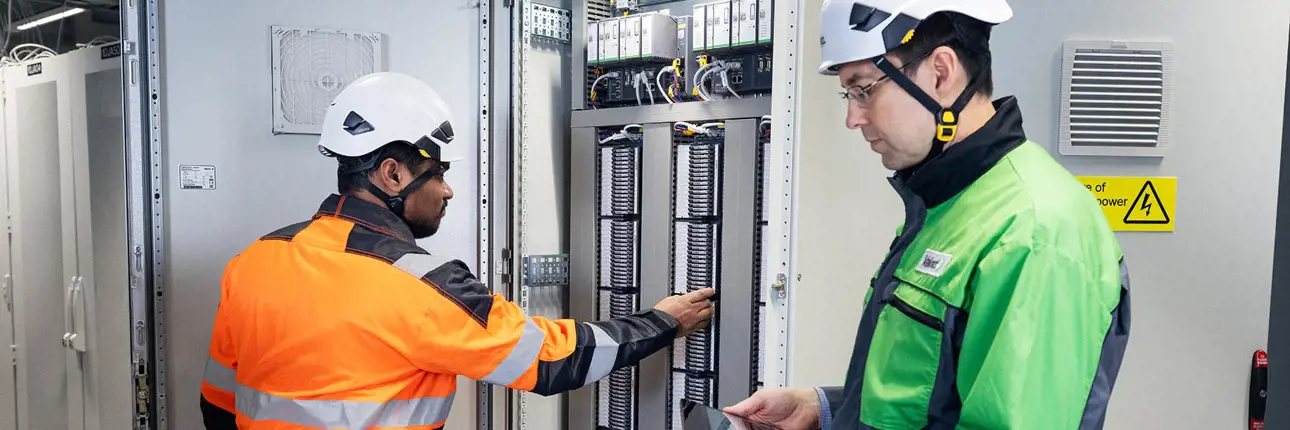
Aging Distributed Control Systems (DCS) increasingly face challenges such as unplanned downtime, difficulties in sourcing spare parts, and a shrinking pool of personnel with expertise in legacy technologies. Migrating to a next-generation automation platform has become essential for maintaining operational efficiency and strengthening competitiveness. With proven system replacement solutions, Valmet provides a safe and seamless DCS migration and replacement path, enabling companies to modernize their control systems effectively on the Valmet DNAe platform without disrupting operations.

Proven expertise
Valmet has successfully completed hundreds of legacy control system replacement projects, enabling customers to maintain familiar operating practices while benefiting from the advanced capabilities of modern automation platforms.
Safe transition
Valmet’s step-by-step implementation approach is specifically designed for DCS migration and replacement projects, minimizing risks, ensuring operational continuity, and leveraging deep process expertise gained across a wide range of industries.
Future-ready platform
Valmet DNAe provides a solid foundation for adopting advanced automation technologies, helping plants improve operational performance, maximize investment value, and achieve sustainable long-term benefits for decades to come.
Function-preserving upgrades for continuous production
In most DCS migration and replacement projects, maintaining production continuity while preserving existing functionality is a top priority. To help operators adapt quickly to the new system, Valmet’s migration solutions allow them to continue using the familiar core functions of the existing system.
At the same time, the operator interface is upgraded to a modern web-based platform, improving real-time operational awareness and enabling greater collaboration between the control room and other plant personnel.
To minimize migration risks and avoid operational disruptions, existing control logic, parameter values, and alarm configurations are retained when the new system is commissioned. Faster implementation and testing also help reduce downtime during system replacement.
With its function-preserving approach, Valmet provides a safe, efficient, and uninterrupted path to automation system modernization, allowing plants to upgrade their technology while maintaining stable operations.
1. Comprehensive assessment of the existing system
Every plant has unique operational requirements and process characteristics. Therefore, every DCS migration and replacement project begins with a comprehensive assessment of the existing system to ensure that all critical aspects are fully evaluated. Valmet’s experts perform a detailed review of the current system and develop a solution tailored to both current operational needs and future objectives.
Key activities:
Extracting and evaluating data from the existing DCS, including:
- Control logic and process parameters.
- Databases of existing applications.
- Alarm configurations, interlocks, and other operational parameters.
- Operator interfaces, control displays, and workflow procedures.
System migration mapping: Analyzing how existing functions will be transferred to the new platform, ensuring that all process controls and operational functions are fully maintained throughout the migration project.
Risk identification and mitigationo: Identifying potential challenges associated with system replacement and developing mitigation strategies to ensure a safe, efficient, and disruption-free transition from the existing system to Valmet’s new DCS platform.
2. Functional description and system design
Valmet develops functional descriptions and system designs based on the capabilities of the existing DCS, ensuring a smooth transition while maintaining a familiar operating experience for plant personnel. With extensive experience across multiple automation platforms and specialized engineering tools, we accurately replicate legacy system functionality on the Valmet DNAe platform.
Các hoạt động chính
- Review and finalize functional descriptions in collaboration with the customer’s engineering team.
- Design HMI displays with a familiar look and operating philosophy, while enabling usability improvements where desired.
- Perform I/O mapping to ensure seamless integration with existing field devices.
- Design a new system architecture that supports current operational requirements and future development objectives.
3. Testing and validation
Comprehensive testing ensures that the new system performs as designed before deployment, while minimizing risks during commissioning and startup.
Key activities:
Factory Acceptance Testing (FAT): The migrated system is simulated and tested in a controlled environment to validate
- Control loop accuracy and process responsiveness.
- Alarm system performance and interlock functionality.
- Usability and effectiveness of the Human-Machine Interface (HMI).
Approved Functional Descriptions serve as the basis for the successful execution and acceptance of the Factory Acceptance Testing (FAT) process.
4. Safe implementation and commissioning
Valmet’s implementation strategy is designed to minimize the impact on production during the transition to the new system, ensuring a safe and efficient migration process.
Key activities”
Efficient implementation planning
- Carry out system replacement during planned plant shutdowns, avoiding unplanned production downtime.
- Optimize shutdown activities by completing as much preparatory and follow-up work as possible outside the shutdown window, reducing on-site implementation time and minimizing shutdown duration.
On-site testing and validation
- Perform loop checks.
- Verify system communications and connectivity.
- Conduct final system validation before startup and commissioning.
Future-proof competitiveness
In addition to preserving existing functionality and ensuring continuous production, Valmet’s modular DCS platform enables plants to adapt to evolving operational requirements and continuously improve throughout the system lifecycle. Long-term enhancement opportunities include:
- Integrating multiple automation systems into a single unified platform.
- Optimizing process performance to improve efficiency and reduce process variability.
- Enhancing operator interfaces with modern UX design to support faster and more informed decision-making.
- Implementing Advanced Process Control (APC) and plant-wide optimization solutions.
- Leveraging data management and advanced analytics for predictive maintenance, energy management, and process diagnostics.
- Utilizing simulation tools for training, testing, and system validation.
- Ensuring long-term system compatibility with a clear upgrade path for future requirements.
- Strengthening cybersecurity with ISA/IEC 62443 certified security standards to protect critical automation infrastructure from cyber threats.