

- 29/07/2026
- Valmet Automation
Valmet D3 Distributed Control System
Valmet D3 DCS has been delivering reliable process control for critical industries worldwide for decades. By combining proven hardware reliability, a straightforward software licensing approach, open connectivity, and a continuous upgrade path, the system helps customers maximize the long-term return on their automation investment (ROI).
Benefits of Valmet D3

Maximize long-term return on investment with a reliable automation platform designed for continuous upgrades and lifecycle support.
Enhance engineering productivity through the reuse of control logic, templates, and application code.
Enable full virtualization across development, testing, operator training, and system validation environments.
Speed up automation projects with extensive built-in capabilities and powerful integration with Valmet FlexBatch for efficient batch process management.
Accomplish everything with a single system
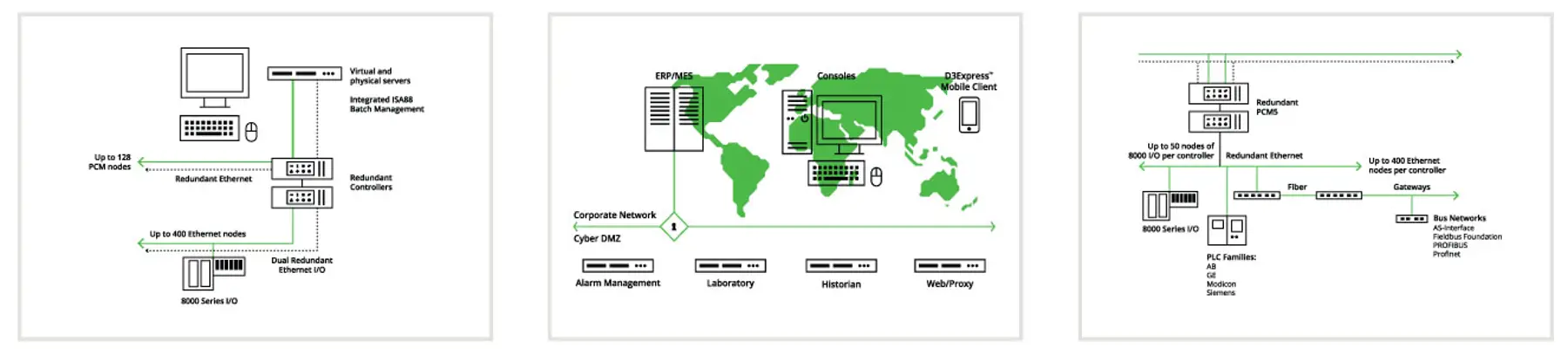
Valmet D3 seamlessly connects and integrates data from virtually any plant system through Ethernet-based communications, OPC standards, and an extensive library of I/O interfaces for existing field devices. Developed in alignment with the principles of the Open Process Automation Forum (OPAF), Valmet D3 provides an open integration architecture that helps organizations maximize the value of their installed assets while remaining future-ready.
Virtually unlimited customization
With Valmet D3, operational concepts can be transformed into practical solutions. The flexible Sequence and Batch Language (SABL) programming environment, built on ISA-88 and ISA-106 standards, enables users to efficiently configure, optimize, and expand production processes to meet the unique requirements of each facility.
A development platform that grows with your business
A Valmet D3 system can scale from 2 to 160 nodes, supporting up to 50,000 I/O points while managing hundreds of concurrent batches and product recipes without compromising performance. This scalability makes it an ideal automation platform for every stage of business growth, from capacity expansion to product diversification.
Comprehensive security from device to system
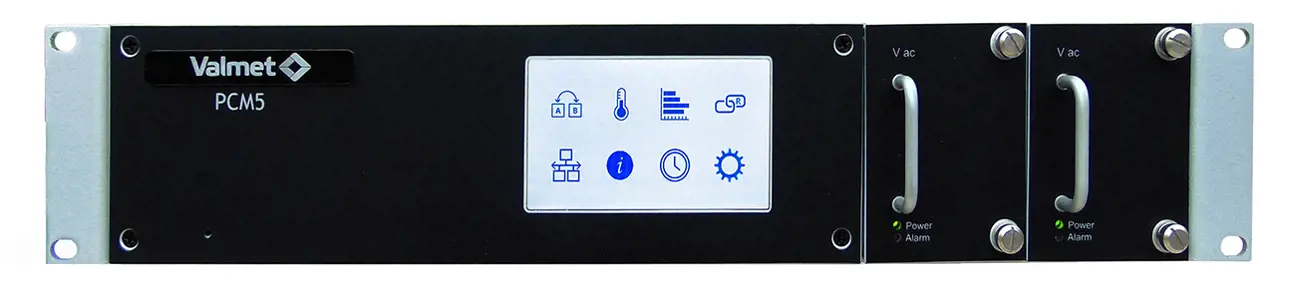
The latest-generation PCM5 Process Control Module is designed with security built in at the hardware level. Features such as Secure Boot, an integrated firewall, application whitelisting, and multiple layers of protection provide a strong foundation for a comprehensive industrial cybersecurity strategy and architecture, spanning from the control layer to the DMZ.
Our solutions
| Control & Optimization | Lifecycle Planning | System Migration |
| Operator Effectiveness | Plant Cybersecurity | Valmet 8000 I/O |
| Learning Services | ||
Effortless modernization with maximum investment protection
Valmet D3 is the only DCS that enables seamless preservation of application development investments from its first release in 1982 to the latest platform versions available today. This continuous evolution path is a unique advantage that delivers exceptional long-term return on investment.
Designed to integrate smoothly with existing plant infrastructure, Valmet D3 supports legacy equipment, obsolete devices, and third-party systems, enabling cost-effective modernization without unnecessary asset replacement.
This flexibility allows upgrades to be implemented in phases, aligned with maintenance shutdowns and investment plans, while maximizing the value of existing spare parts and installed assets.
For systems with redundant controllers, software upgrades can be performed online without interrupting production, ensuring access to the latest functionality while maintaining continuous operation.
With thousands of successful I/O and system upgrade projects worldwide, Valmet experts can complete many modernization projects within a single weekend shutdown, minimizing production impact and project risk.
Proven reliability for demanding process control
Robust, secure process controllers
The Valmet PCM5 Process Controller is engineered to meet the two most critical requirements of modern industrial automation: long-term reliability and continuous technology evolution.
Designed and manufactured by Valmet to ensure maximum performance and quality, PCM5 combines a highly secure Linux-based platform with an intuitive capacitive touchscreen interface, simplifying both configuration and diagnostics. Its modern C/C++ development environment enables rapid deployment of new technologies and customer-specific innovations.
Built with cybersecurity at its core, PCM5 incorporates:
- Secure boot
- Self-configuring firewall
- Application whitelisting
- Standard IT configuration tools
- Secure Linux Operating System
Together, these capabilities provide a strong foundation for a comprehensive industrial cybersecurity strategy, helping plants maintain secure, reliable, and future-ready operations.
Field-proven I/O reliability
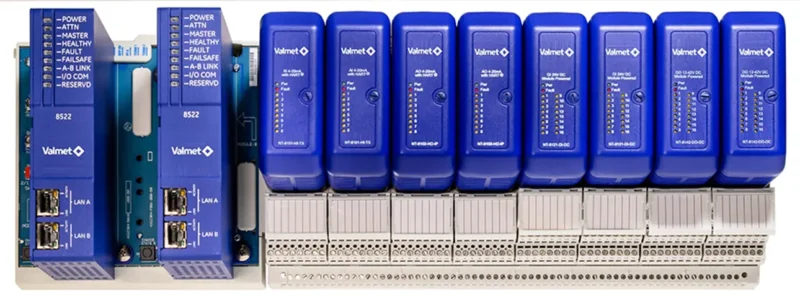
The Valmet 8000 Series I/O provides a comprehensive range of distributed I/O modules, engineered for reliable operation in demanding industrial environments. Designed to withstand temperatures from -40°C to +70°C and meet ISA G3 corrosion protection requirements, the platform delivers proven performance where reliability matters most.
The system supports direct HART communication through I/O modules without additional field wiring and includes intrinsically safe I/O modules for hazardous area applications.
To maximize system availability, Valmet 8000 I/O supports both redundant Ethernet communication and I/O module redundancy configurations from 1:1 up to 6:1, ensuring high reliability and fault tolerance.
Valmet D3 also offers native support for leading third-party I/O platforms, including:
- Schneider Electric
- Siemens
As well as widely used industrial communication protocols such as:
- Modbus/TCP
- EtherNet/IP
- FOUNDATION Fieldbus
- DF-1
This open architecture simplifies both new system integration and modernization projects, reducing engineering effort and lifecycle costs.
The Valmet D3 platform is built on a high-performance Ethernet architecture that connects all system nodes through a fully redundant network infrastructure, eliminating single points of failure in the control network. High-speed 100 Mbps Ethernet communication between PCM and DCM controllers ensures fast, reliable data exchange throughout the automation system.
Open connectivity. Unlimited integration.
Built on an open architecture philosophy, Valmet D3 is designed to integrate seamlessly with both existing and future plant systems, helping organizations maximize the value of their installed assets while avoiding costly, large-scale replacements.
Valmet D3 enables secure access to and sharing of process information across a wide range of industry-standard applications and interfaces, including OPC Classic DA & AE, OPC UA, Microsoft SQL, Windows API, Microsoft Word, Excel, and Access. Production data can also be accessed through standard technologies such as ODBC, DCE, OPC, and C-based database interfaces, providing a solid foundation for digitalization and enterprise-wide data utilization.
Native I/O Support
Valmet D3 provides native support for Valmet I/O platforms, including:
- Valmet 8000 Series I/O
- Valmet 16000 Series I/O
Native integration ensures optimized communication performance, simplified engineering, and long-term system scalability.
Extensive industrial connectivity
Valmet D3 includes built-in connectivity to a broad range of industrial communication protocols, enabling straightforward integration with field devices, third-party systems, and plant-wide automation infrastructures. Its open architecture reduces integration complexity, protects existing investments, and provides the flexibility needed for continuous modernization and digital transformation.
- Allen Bradley DF-1
- EtherNet/IP
- Modbus TCP/IP
- Modbus RTU
- Modbus Plus
- Profibus-DP
- ControlNet
- Foundation Fieldbus
- Data Highway Plus
- AS-Interface
Direct connection of PLC and I/O system
Direct PLC and I/O connection
• Schneider Electric (Modicon)
I/O: 200, 800, Quantum
PLC: Quantum, 584, 984
• Rockwell Automation
I/O: 1771, Flex I/O (1794)
PLC: PLC-2, PLC-3, PLC-5, SLC 5, ControlLogix
• Siemens
I/O: 505, S7, ET200
• Triconex
Safety PLCs (Safety System PLCs)
Modern visual
High-performance operator experience
Valmet D3 TotalVision® HMI provides real-time visualization of both continuous and batch processes through a rich, highly configurable library of smart graphics. Operators can monitor and control equipment, interact with operating sequences, and access SOPs, maintenance records, and related documentation directly from the graphical interface.
A shared graphics library architecture ensures consistency across the system, with updates automatically reflected throughout all operator displays. Information can also be accessed via standard web browsers, enabling centralized monitoring of multiple plants through a single operational view.
Intuitive engineering with ProcessVision
Valmet D3 ProcessVision provides engineers and operators with a powerful environment for monitoring, analyzing, and optimizing plant performance. From system-wide overviews down to individual I/O channels, information is presented through intuitive displays, advanced diagnostics, and rapid navigation tools.
ProcessVision supports global configuration synchronization, enhanced event analysis, and simplified operation and maintenance activities. It also helps strengthen cybersecurity, reduce off-spec production, improve asset utilization, and facilitate knowledge transfer across generations of plant personnel.
Intelligent alarm management
The right information at the right time
The integrated alarm management system in Valmet D3 enables detailed alarm configuration by tag, unit, or area, ensuring that critical information reaches the right operator at the right time. Comprehensive alarm history and analysis tools provide valuable insights for continuous operational improvement.
Advanced capabilities such as Dynamic Alarm Management, Alarm Shelving, alarm auditing, and centralized parameter management help reduce alarm flooding, improve situational awareness, and support faster decision-making during critical operating conditions.
Supported by Valmet’s experienced application specialists, customers can implement a plant-wide alarm management strategy that enhances safety, operational consistency, and performance across both DCS and PLC environments.
Recipes as programs
Recipe development without programming complexity
Valmet FlexBatch® integrates recipe management directly into the control system, enabling operators to create, scale, modify, and schedule production recipes with ease. Whether producing food, beverages, pharmaceuticals, or specialty chemicals, FlexBatch streamlines recipe lifecycle management and accelerates production readiness.
By reducing first-batch startup time, minimizing product changeover delays, and improving production efficiency, FlexBatch helps manufacturers bring new products to market faster and at lower cost. The platform also supports regulatory compliance requirements such as FDA 21 CFR Part 11 and GAMP 5, while strengthening data integrity and reducing validation effort.
Simplified batch process design
Built on the ISA-88 standard, FlexBatch uses an intuitive graphical environment for creating, managing, and documenting batch procedures. Reusable libraries of phases and operations significantly reduce engineering effort, simplify maintenance, and accelerate project implementation.
This modular approach minimizes development and testing time while providing greater consistency across production operations.
Production scheduling and batch management
Operators can create, schedule, and manage multiple production orders to meet customer demand and production targets. FlexBatch provides real-time visibility into production status while enabling adjustments to equipment allocation, recipe parameters, and batch schedules as operating conditions change.
Flexibility during execution
FlexBatch allows production parameters and schedules to be modified even while a recipe is running, including:
- Recipe parameters (e.g., ingredient or enzyme dosage)
- Process execution steps
- Production schedules and batch quantities
- Batch start conditions
- Equipment allocation
- Batch size adjustments
This flexibility helps manufacturers respond quickly to changing production requirements without compromising consistency or control.
Integrated simulation
Independent environment for testing, training, and development
Valmet D3 includes an integrated simulation environment that operates independently of production hardware, enabling users to develop applications, perform operator training, and validate control strategies in a safe, risk-free environment.
Virtual D3 systems can be deployed on standard workstations, supporting FAT, SAT, and application testing without impacting the live control network. The simulation platform remains completely isolated from the operating DCS, ensuring safe and efficient project execution.
By simulating process dynamics, equipment behavior, I/O, operator interfaces, and abnormal operating scenarios before startup, organizations can reduce commissioning time, minimize project risk, and improve implementation efficiency.
Security by design
Cybersecurity is built into the Valmet D3 platform from the ground up.
The Valmet PCM5 Process Controller incorporates advanced cybersecurity features designed to address the challenges of today’s connected industrial environments. Distributed redundancy for both servers and controllers enhances system resilience and helps maintain operations during major disturbances or cybersecurity incidents.
Seamless redundant networking and strict endpoint control policies reduce the risk of malware propagation through USB devices and removable media. In addition, role-based access control integrated with Microsoft Windows Authentication enables precise management of user permissions across the entire automation system.
Intelligent PID optimization
Valmet PID Loop Optimizer simplifies PID tuning, enabling inexperienced users to achieve results comparable to those of process control specialists. Using advanced modeling and optimization algorithms, the application analyzes operational data, automatically identifies process characteristics, and recommends optimal controller parameters.
The result is improved process stability, reduced energy consumption, enhanced product quality, and higher overall plant performance.
Beyond tuning, PID Loop Optimizer provides comprehensive loop performance analysis through key indicators such as response time, overshoot, and control stability. Engineers can simulate the behavior of new PID settings before implementation, reducing risk while improving control performance.
The software also automatically generates detailed reports covering operational data, process models, simulation results, performance metrics, and stability assessments. This standardized approach helps preserve engineering knowledge, streamline optimization activities, and support continuous improvement initiatives throughout the plant lifecycle.